
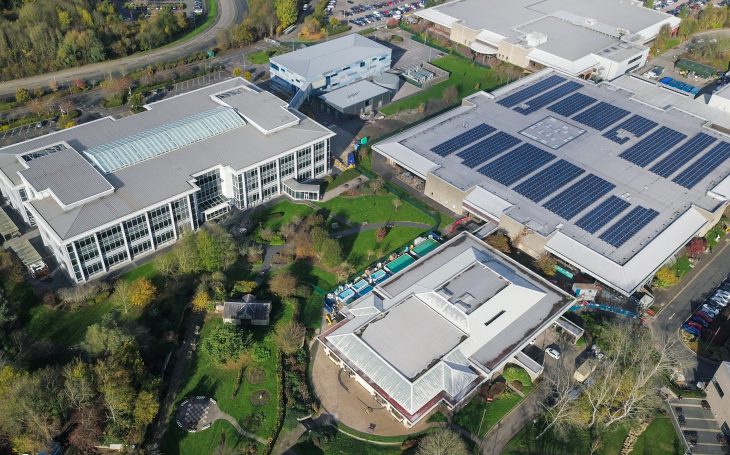
Over the past 20 years, solar power production has increased dramatically, partly due to the desire to boost sustainability and benefit from large tax incentives that help business owners’ bottom lines. Commercial solar panels can be added to corporate, non-profit, and government properties to generate power, just like solar panels can be added to residential home roofs.
What Is Commercial Solar?
Even though solar energy has been available for a while, many businesses still need electricity. On the other hand, companies, government agencies, and nonprofits may drastically lower their carbon footprint in addition to saving money by making the move to solar electricity.
Commercial solar panels, like household solar alternatives, capture solar radiation and convert it into electricity for powering buildings such as offices, factories, warehouses, and more.
Where Can Commercial Solar Panels Be Installed?
Since the roof of a house provides the finest and largest surface area for the solar panels to capture sunlight, residential solar systems are virtually usually located there. Commercial solar installation may also be effectively accomplished through roof installation, particularly in situations where large, flat roofs are present, such as in factories, warehouses, office buildings, and other similar places.
Yet, there are other locations besides roofs where commercial solar panels may be put. For example, parking spaces may be converted into solar carports, which are just outdoor garages covered with solar panels. Ground-mounted solar arrays are an additional alternative; some panels may even tilt and rise at specific times of the day to receive the most possible sunlight.
How Much Do Commercial Solar Panels Cost?
The cost of installing commercial solar panels can range from $100,000 for small businesses to $1,000,000 or more for larger structures. It makes sense that an organization will require more solar panels to generate the same amount of electricity the larger it is—both in terms of the building’s size and its energy requirements.
Factors That Impact the Cost of Commercial Solar Panels
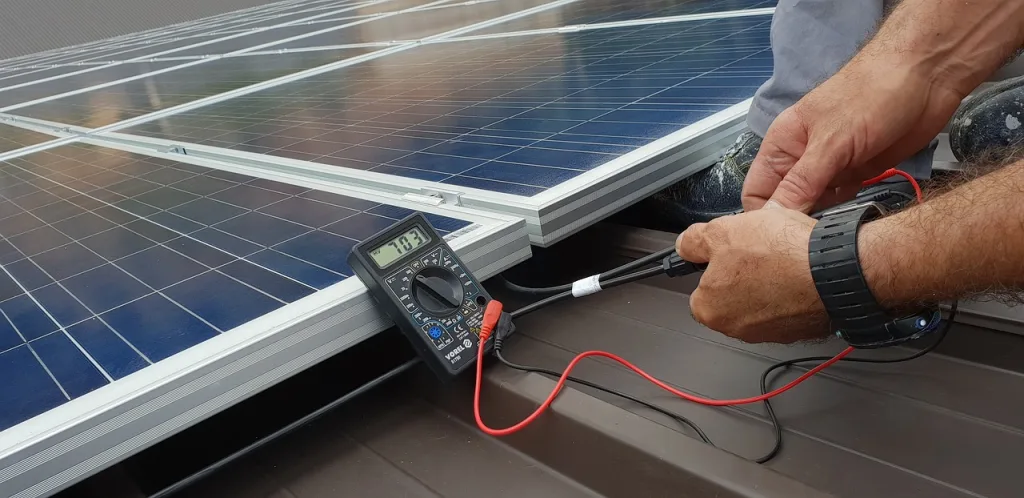
Like any building or renovation job, several variables might affect the cost. Furthermore, there is a wider variety of prices for commercial and industrial areas due to their wide size variations.
For a business installation, the cost and installation time would go up if more solar panels are required. Commercial solar installation will probably cost more if a building’s construction makes it harder.
Remember that the cost of installing business solar will also be covered by the large tax benefits and the overall decrease in energy prices. The amount of energy generated and the energy required to run the firm will determine the savings as well. A company may occasionally be able to resell the excess energy generated by a commercial solar system that it is not using.
Getting estimates from several commercial solar contractors in your area is the best method to find out how much it will cost to install commercial solar power for your organization’s needs.
Commercial Solar Panel Rebates, Tax Credits, and Other Incentives
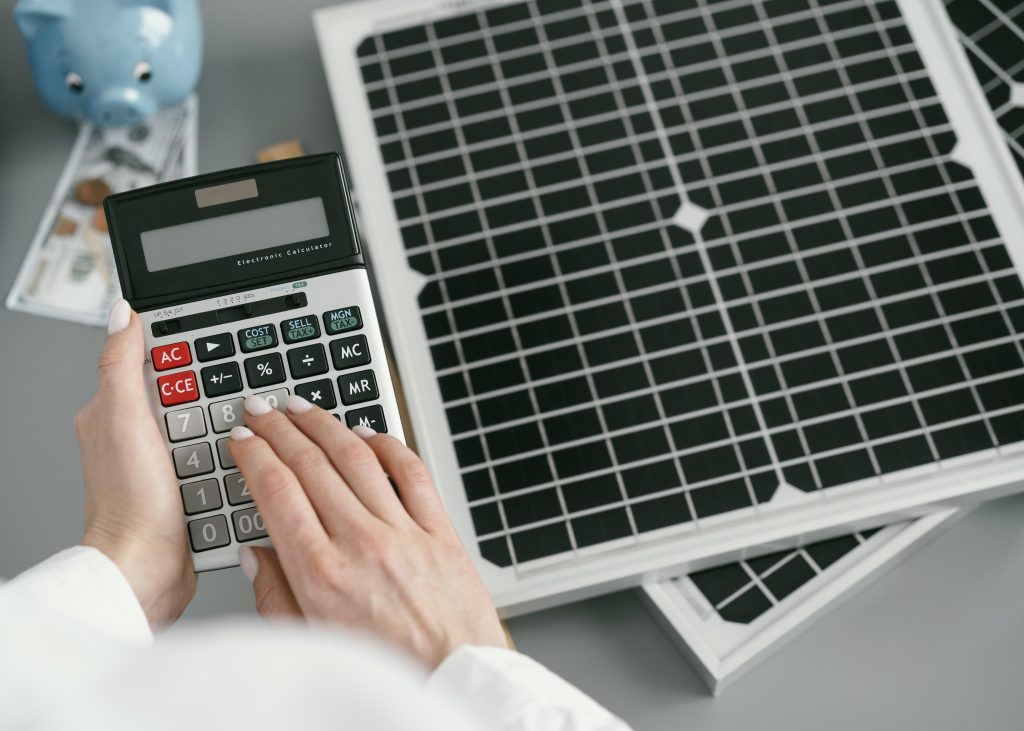
A government program called the Solar Investment Tax Credit (ITC) encourages company owners to put solar panels on their commercial buildings.
For the whole cost of solar photovoltaic (PV) systems built during the current tax year, a 30% tax credit was initially offered. Congress did, however, approve an extension of the ITC in December 2020, which would cause the tax credit to decrease in the following years. The credit for system installations started in 2020 and completed in 2022 is 26%; in 2023, it drops to 22%; and in 2024 and beyond, it is 10%.
Frequently Asked Questions (FAQs)
How are commercial solar panels installed?
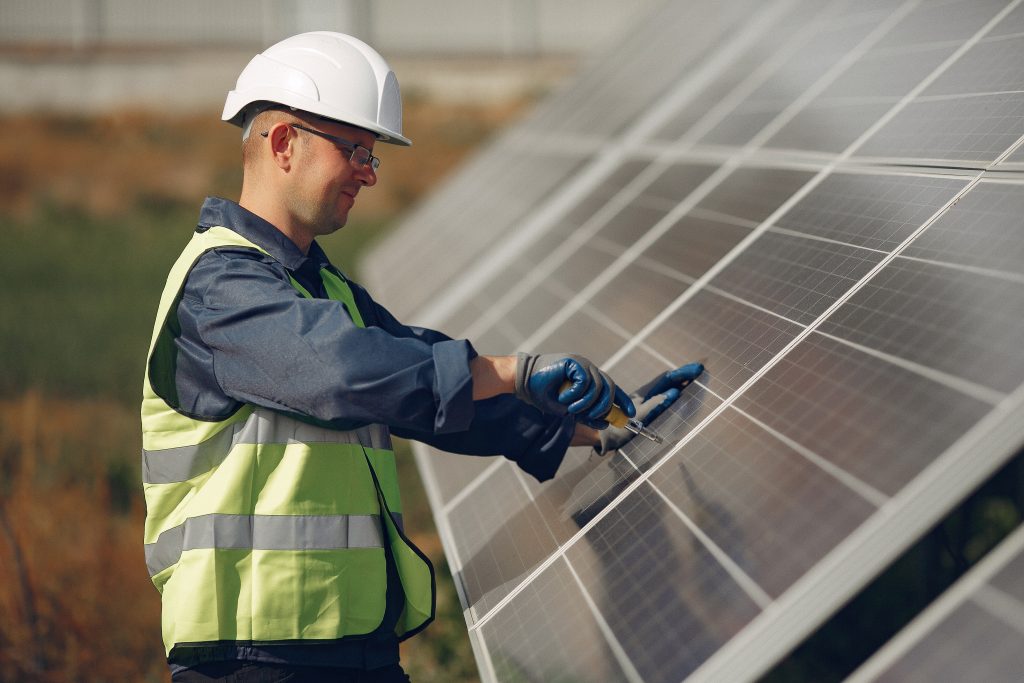
Commercial solar panels are usually fitted using roof-penetrating gear (attached racking) on sloping roofs or heavy weights (ballasted racking) to anchor them on flat roofs. These installations are large and require specialized personnel to install due to their nature.
How do you size a commercial solar system?
Determining the size of a business solar system you require is not that hard, even though the installations are complex. The method is to multiply the number of hours that your location experiences peak sunshine by the hourly energy demands of your business. The total number of watts required for your business solar system may then be calculated by dividing that figure by the wattage of a panel.


