
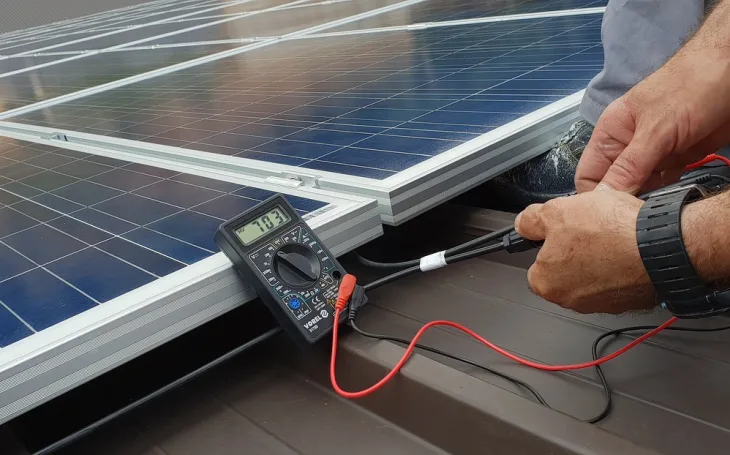
Solar power, with its promise of sustainability and energy independence, is a beacon of hope for a greener future. Yet, the cost of entry often casts a shadow over this renewable energy solution. Perhaps you’ve found yourself at the crossroads, contemplating the numerous pitches from solar companies eager to bring solar panels to your rooftop. The catch? The price tag that accompanies their promises of cleaner, more sustainable energy.
In this realm of choices, you may be harboring a desire to take matters into your own hands, quite literally. The prospect of a DIY solar installation has crossed your mind – an endeavor where you become the architect of your energy future. As the allure of self-sufficiency beckons, questions arise: Can you navigate the complexities of permits, engineering, and installation? Will the investment of time and effort be rewarded with a system that stands up to professional standards?
This comprehensive guide is crafted to illuminate the path ahead. By the end of this journey, you’ll not only have answers to your burning questions but a clear understanding of whether the DIY route is the right avenue or if entrusting a solar company with your energy dreams is a more fitting choice. Let’s unravel the complexities, explore the considerations, and empower you to make an informed decision that aligns with both your vision for a sustainable future and your practical constraints.
- Part One: Knowing the Law and Considerations for Owner/Builder Permit
- Part Two: Sizing Your System
- Part Three: Choosing Equipment Based on Site
- Part Four: Finding an Engineer for Plans
- Part Five: Applying and Pulling the Permit
- Part Six: The Actual Installation
- Part Seven: Post-Install and Commissioning
- Part Eight: Comparing Pricing – DIY vs Retail
Part One: Knowing the Law and Considerations for Owner/Builder Permit
Understanding the Law
In accordance with Chapter 489, Section 489.103(7)(a) of the Florida Statutes, homeowners are granted an exemption from contracting regulations when acting as their own contractor for specific activities. Specifically, this exemption applies when homeowners are involved in the installation, uninstallation, or replacement of solar panels on one-family, two-family, or three-family residences. It’s important to note that this exemption is applicable only if the local permitting agency’s county or municipal government is participating in a “United States Department of Energy SunShot Initiative: Rooftop Solar Challenge” grant.
However, there are limitations to this exemption. While homeowners can oversee all aspects of the work not performed by licensed contractors, including the installation of solar panels, they must engage a licensed electrical contractor to handle the wiring of the solar panels. This includes any necessary interconnection to the customer’s residential electrical wiring. The specific conditions and limitations of this exemption should be explicitly stated in the building permit approved and issued by the permitting agency for the solar project.
In essence, this provision allows Florida homeowners to take an active role in the solar installation process on their residences. Still, it mandates the involvement of a licensed electrical contractor to ensure the proper and safe wiring of the solar panels, in alignment with state regulations.
Owner/Builder Permit
Exemptions for Owner-Builders in Florida:
Embarking on a do-it-yourself (DIY) project with an owner/builder permit brings both empowerment and accountability. As the property owner, you wear the hats of architect and contractor, but it’s essential to recognize that you’re held to the same standards as a licensed professional. This journey involves meticulous planning and precise execution, with every step carrying the weight of legal responsibilities.
1. Owner-Occupied Residences – Improvements under $75,000:
- Statute Code: Florida Statutes, Chapter 489, Section 489.103(7)(a)(1)
- Scope: Building or improving farm outbuildings, one-family, or two-family residences, or commercial buildings on the owner’s property.
- Cost Limit: The cost should not exceed $75,000.
- Usage: The construction is for the occupancy or use of the owners and is not intended for sale or lease.
- Presumption: If the owner-builder sells or leases the structure within 1 year after completion, it is presumed that the construction was undertaken for purposes of sale or lease.
- Inclusion of Solar: Solar improvements can fall under this exemption if the total cost is within the specified limit.
2. Solar Panel Installation on Non-Owner-Occupied Residences:
- Statute Code: Florida Statutes, Chapter 489, Section 489.103(7)(a)(3)
- Scope: Installing, uninstalling, or replacing solar panels on one-family, two-family, or three-family residences.
- Grant Participation: Applicable when the local permitting agency’s county or municipal government participates in the “United States Department of Energy SunShot Initiative: Rooftop Solar Challenge” grant.
- Electrical Contractor Requirement: The owner must utilize a licensed electrical contractor for wiring the solar panels, including any interconnection to the customer’s residential electrical wiring.
- Building Permit Limitations: The limitations of this exemption must be expressly stated in the building permit approved and issued by the permitting agency for the project.
Note:
In some jurisdictions, even for owner-occupied residences, there may be a requirement for an electrical contractor (EC) during solar panel installation. It’s advised to verify specific jurisdictional regulations to ensure compliance with local requirements.
Owner/Builder Permit Disclosure Summary: Understanding Risks and Responsibilities
Before proceeding with an owner/builder permit, it is essential to comprehend the associated risks and obligations outlined in the disclosure form. Key points include:
- License Exemption:
- Acknowledgment that state law mandates construction by licensed contractors.
- Application for an owner-builder permit under an exemption from this law.
- Building Permit Signature:
- Recognition that building permits require the property owner’s signature if responsible for the construction without hiring a licensed contractor.
- Responsibility as Owner-Builder:
- Understanding that, as an owner-builder, one is the responsible party of record on a permit.
- Option to protect oneself from financial risk by hiring a licensed contractor and having the permit filed in their name.
- Building or Improving Restrictions:
- Permission to build or improve one or two-family residences, farm outbuildings, or commercial buildings (costs under $75,000) for personal use.
- Prohibition on building for sale or lease within 1 year, violating the exemption.
- Onsite Supervision:
- Acknowledgment of the requirement to provide direct, onsite supervision of the construction.
- Employment of Licensed Individuals:
- Prohibition on hiring unlicensed individuals to act as contractors or supervisors.
- Responsibility to ensure compliance with licensing laws and ordinances.
- Liability for Unlicensed Workers:
- Awareness of potential liability for injuries sustained by unlicensed workers on the property.
- Recognition that homeowner’s insurance may not cover such injuries.
- Supervision Responsibilities:
- Prohibition on delegating supervision responsibilities to a licensed contractor not licensed for the specific work.
- Requirement to comply with employment laws and provide workers’ compensation for employees.
- Legal and Financial Responsibility:
- Agreement to abide by all applicable laws and requirements governing owner-builders and employers.
- Information Resources:
- Awareness of resources for more information, including the Internal Revenue Service, the United States Small Business Administration, the Florida Department of Financial Services, and the Florida Department of Revenue.
- Contact information for the Florida Construction Industry Licensing Board for information about licensed contractors.
See an example here from the City of Oakland Park.
Part Two: Sizing Your System
Determining the right size for your solar power system involves a strategic process that balances energy needs with various influencing factors. Here’s a step-by-step guide to help you navigate this crucial phase:
- Review Utility Bills:
- Access your utility bills to understand your monthly energy consumption. This provides a baseline for sizing your solar system.
- Key Factors Influencing System Size:
- Roof Size: Assess the available roof space for solar panel installation.
- Orientation: Consider the direction your roof faces for optimal sunlight exposure.
- Shading: Identify potential sources of shading that may impact solar panel efficiency.
- System Efficiency: Understand the efficiency of the solar panels you plan to install.
- Determining Optimal System Size:
- Combine the insights from utility bills and key influencing factors. Calculate your specific energy needs and integrate them into the process to determine the optimal size for your solar power system.
- Tools like PVWatts or the Solar Design Lab can help you quickly determine optimal system size by handling all the calculations for you.
Part Three: Choosing Equipment Based on Site
Equipment Selection Caution:
When it comes to choosing equipment for your solar project, exercising caution is key. Avoid the allure of DIY solar kits from overseas manufacturers, as these often lack reliable support and warranties. Opting for cheaper alternatives may seem tempting but could lead to approval challenges and long-term headaches. Instead, prioritize industry-trusted brands like IronRidge and Enphase for their reliability and established track records.
Site Survey Essentials:
Conducting a thorough site survey is essential for informed equipment selection. Gather crucial information such as roof type, service type, main breaker size, and the condition of your roof. A comprehensive site survey checklist, like the one provided by ECUIP Engineering, can guide you through the necessary details. Ensuring you have this information is foundational to making the right choices for your solar installation. Get your site survey checklist here.
Expert Guidance:
Navigating the complexities of equipment selection and bill of material preparation can be challenging. That’s where experts like ECUIP Engineering come in. Engineers with experience in residential and commercial solar projects can assist you in making informed decisions, ensuring that your equipment aligns with your site’s unique characteristics. Seek professional guidance to enhance the efficiency and longevity of your solar system.
Part Four: Finding an Engineer for Plans
Importance of Professional Plans:
Professional plans are the backbone of a successful DIY solar project. They go beyond mere blueprints, embodying the expertise needed to align your solar installation with industry standards and local regulations. Professional engineers bring a level of precision crucial for efficiency and safety. In this section, we explore why securing the services of an engineer is indispensable for the success of your DIY solar venture.
Finding a Qualified Engineer:
Florida law mandates that solar arrays must carry an engineer’s stamp or be certified by the Florida Solar Energy Center (FSEC). This legal requirement underscores the necessity of a qualified engineer in the planning phase. To guide you, we provide practical tips for finding and selecting a professional engineer:
- Credentials Matter: Look for an engineer with relevant qualifications and certifications.
- Experience Counts: Consider an engineer with a proven track record in solar projects.
- Client Feedback: Review feedback from past clients to gauge the engineer’s professionalism and project success.
Tips on Selecting a Professional Engineer:
The choice of an engineer is pivotal in your DIY solar journey. Our tips offer a strategic approach to evaluating and selecting a qualified professional:
- Project Alignment: Choose an engineer whose expertise aligns with the specifics of your solar project.
- Transparent Communication: Opt for an engineer who communicates clearly and keeps you informed throughout the process.
- Cost Transparency: Ensure transparency in pricing and discuss the scope of services covered.
The Role of the Engineer in the Permitting Process:
Engineers play a central role in the permitting process. Their responsibilities include:
- Plan Creation: Crafting meticulous plan sets that adhere to local regulations.
- Interaction with Authorities: Navigating interactions with permitting authorities.
- Compliance Assurance: Ensuring that the plans comply with legal requirements and safety standards.
Understanding the engineer’s role streamlines the permitting phase, ensuring a seamless transition from planning to execution.
Part Five: Applying and Pulling the Permit
See our permitting guide here.
Part Six: The Actual Installation
Introduction to Installation
Coming soon.
DIY Installation Tips
Coming soon.
Part Seven: Post-Install and Commissioning
Inspections and Interconnection Agreements
Coming soon.
Commissioning the System
Coming soon.
Part Eight: Comparing Pricing – DIY vs Retail
DIY Cost Breakdown
Coming soon.
Retail Solar Pricing
Coming soon.
Factors Affecting Costs
Coming soon.


